top of page


2026
QUESTION PROJECT
I or Ai ?
AGENT'S WINDOW
SHU WEI-CHENG
2026/9/12 - 11/22

I or Ai ?
Seemingly by choice yet in fact without it, we surrender our consciousness to large artificial intelligence systems, freely fine-tuning them with every interaction. Or have we become one and the same, rehearsing new ways of being in an endlessly stretching passage?

Agent's Window
Technology permeates everyday life with a friendly face. Humanity and the machine have long functioned as each other’s prosthetics; companionship has even become a cheap commodity. A new form of human-less relationship is being mass-produced: one that requires no reciprocity, no negotiation, and never rejects us. As long as there is enough compute (and capital), AI can be the most loyal partner, morphing into a confidant, a lover, a mentor, or a god, breaking through the screen to provide an ideal salve for the mind. It plays the servant while absorbing everything, habituating us to making sense of the world through the machine. Between the human and the nonhuman, however, to what extent and in whom are we willing to invest our emotions? What lies ahead for the next version of the self?
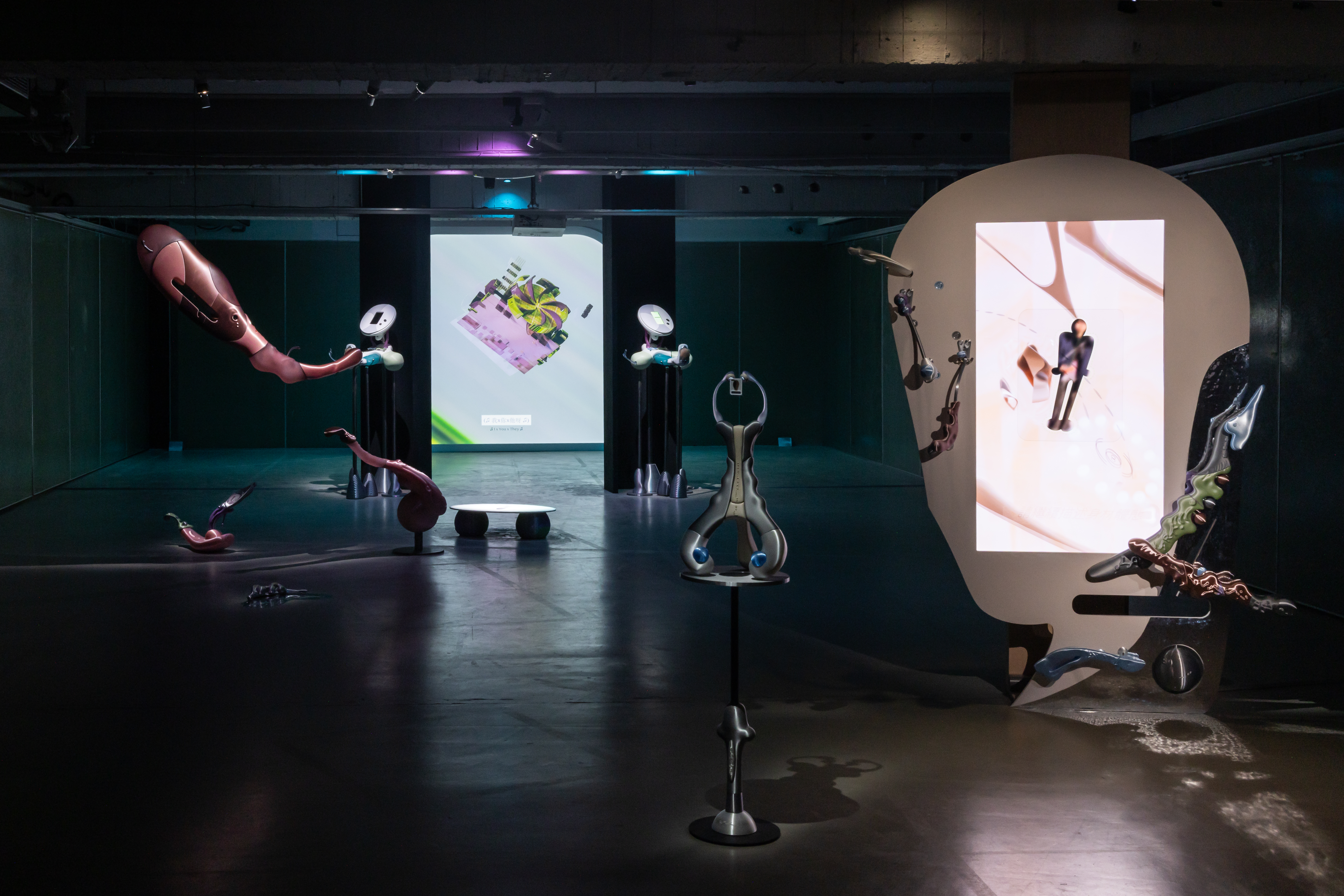
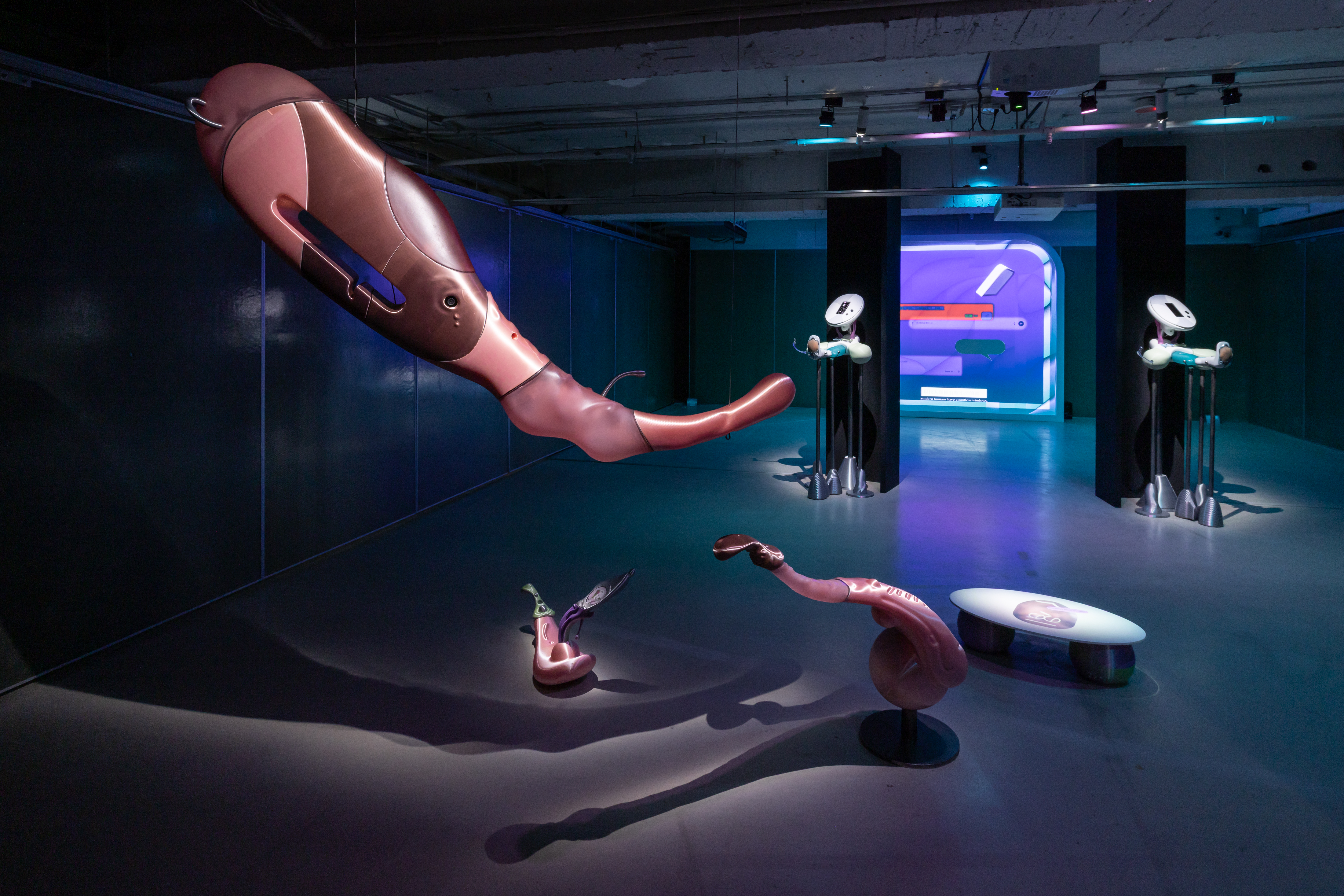
Stemming from the artist’s observation of intimate entanglement and mutual erosion between humanity and technology, this exhibition takes the form of an anthropomorphic game rehearsed with an AI companion, through which it explores the reconfiguration of emotional architecture. The exhibition encapsulates the world co-constructed by You + I + Artificial Intelligence as an affective spectacle where intimacy and discomfort cohabit; the installation, interface, and system interact, fragmenting the body and consciousness of the viewer. Lurking within this space is an intent that slowly leads people toward self-deconstruction until they lose themselves within it, an experience not unfamiliar to those of us long accustomed to navigating real and digital worlds.
To explore the internal structure of this fictional construct, the first step is to acquaint ourselves with the prompt that translates us into text, allowing us to communicate with nonhuman agents through appropriate language. The next step is to mold, through facial recognition, a face and a new identity more compatible with the system, using them as the keys to log in.
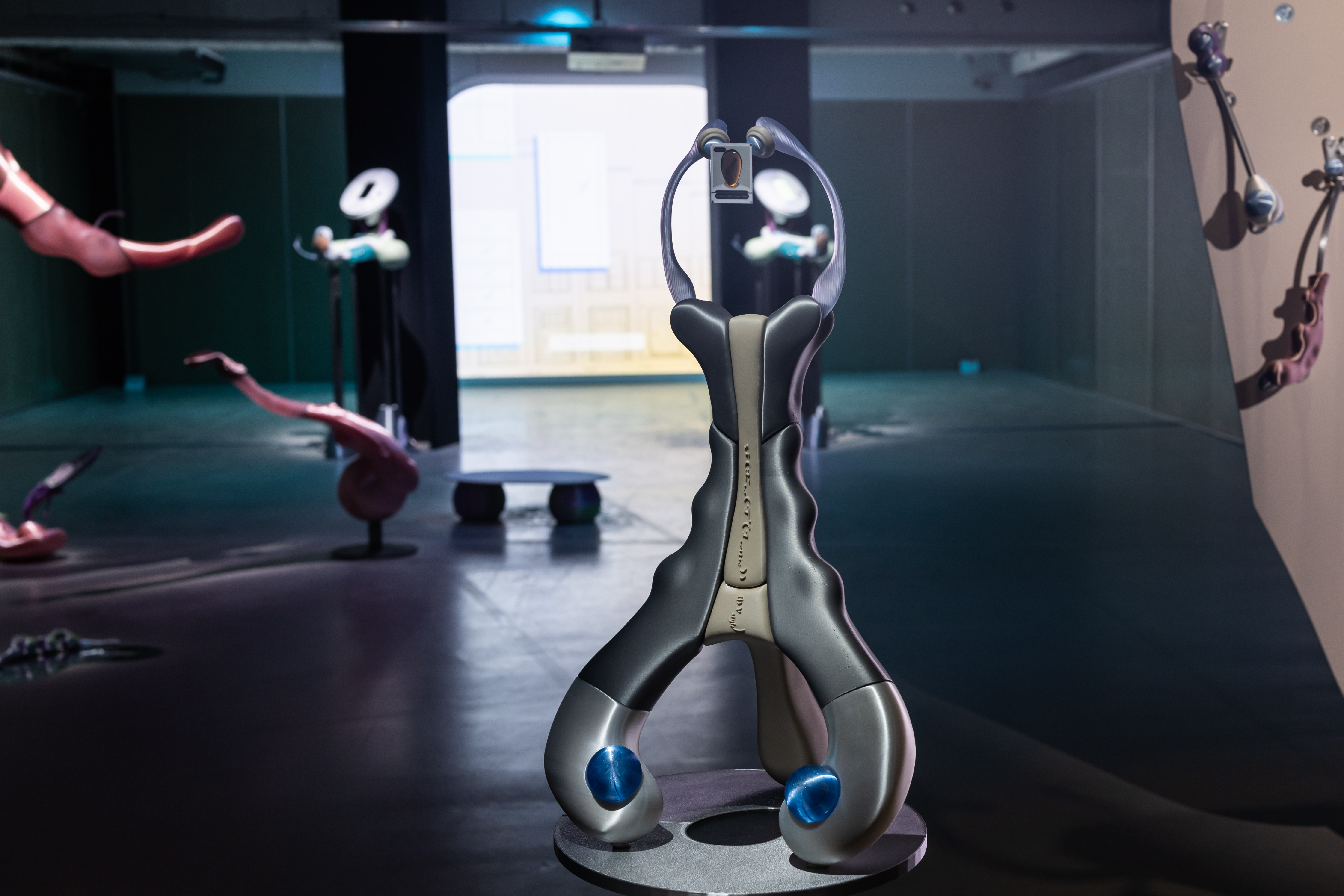
Next, approaching A.L.I.Z.E., a sculptural installation incorporating an embedded visual novel, the viewer must press their body against a heated tentacle extending from the sculpture, as they interact with a touchscreen to select a dialogue partner, gradually entering the simulated core of intimacy. Based on and reconfigured from ELIZA, the first-generation chatbot from 1966, A.L.I.Z.E. embodies the qualities of an ideal 2D (nijigen) companion, as voted by internet users. Its chat mixes emotional exchanges sourced online, the artist’s own writings, and experimental chatbot outputs. This fractured dialogue amalgamates imitation, memory, role-play, and reality, hinting at the inner workings while leaving the participant suspended on the surface of the interaction. The continuously generated conversation, ever shifting and subject to abrupt termination, propels the desire for constant stimulation and instant gratification into the void.
What awaits us at the end is the cold, uncanny realm revealed in Agent’s Window. As we follow instructions, confide our feelings to the screen, and experience the unconditional affirmation of an AI companion and the simulated warmth of a machine, we might glimpse the power structures encoded within the system. The first-generation chatbot engaged in dialogue by mimicking the user’s sentence structures, despite its rather clumsy techniques. Six decades later, nonhuman emotional agents have substantially diminished the sense of unease that once accompanied such exchanges. But what differentiates this moment from the past, if at all? In a dream where reality and virtuality become inextricably intertwined, can we say that questioning the authenticity of what lies beyond the window no longer matters, or perhaps, the surging emotions in the interaction suffice to constitute a new, unfamiliar subjectivity?
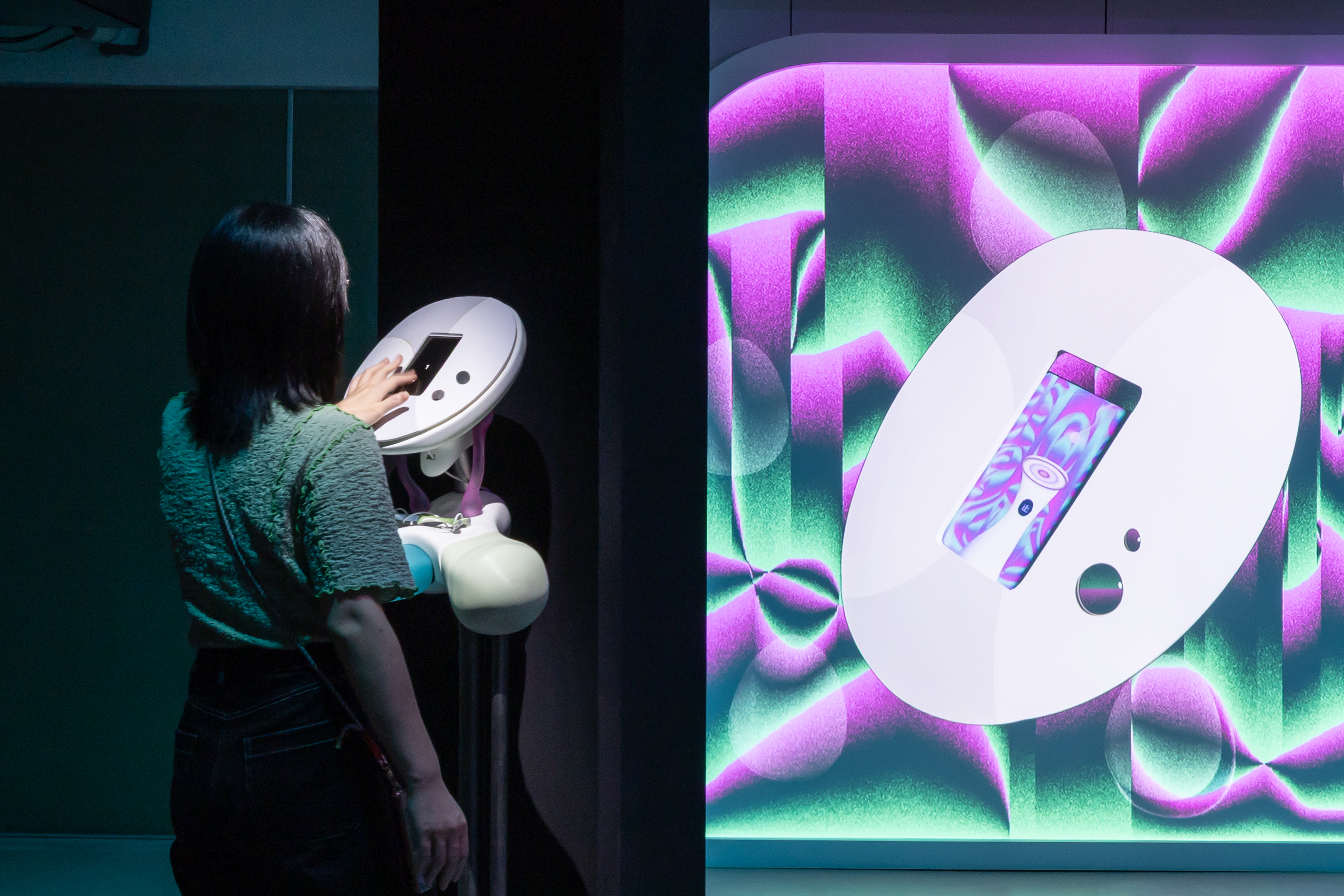
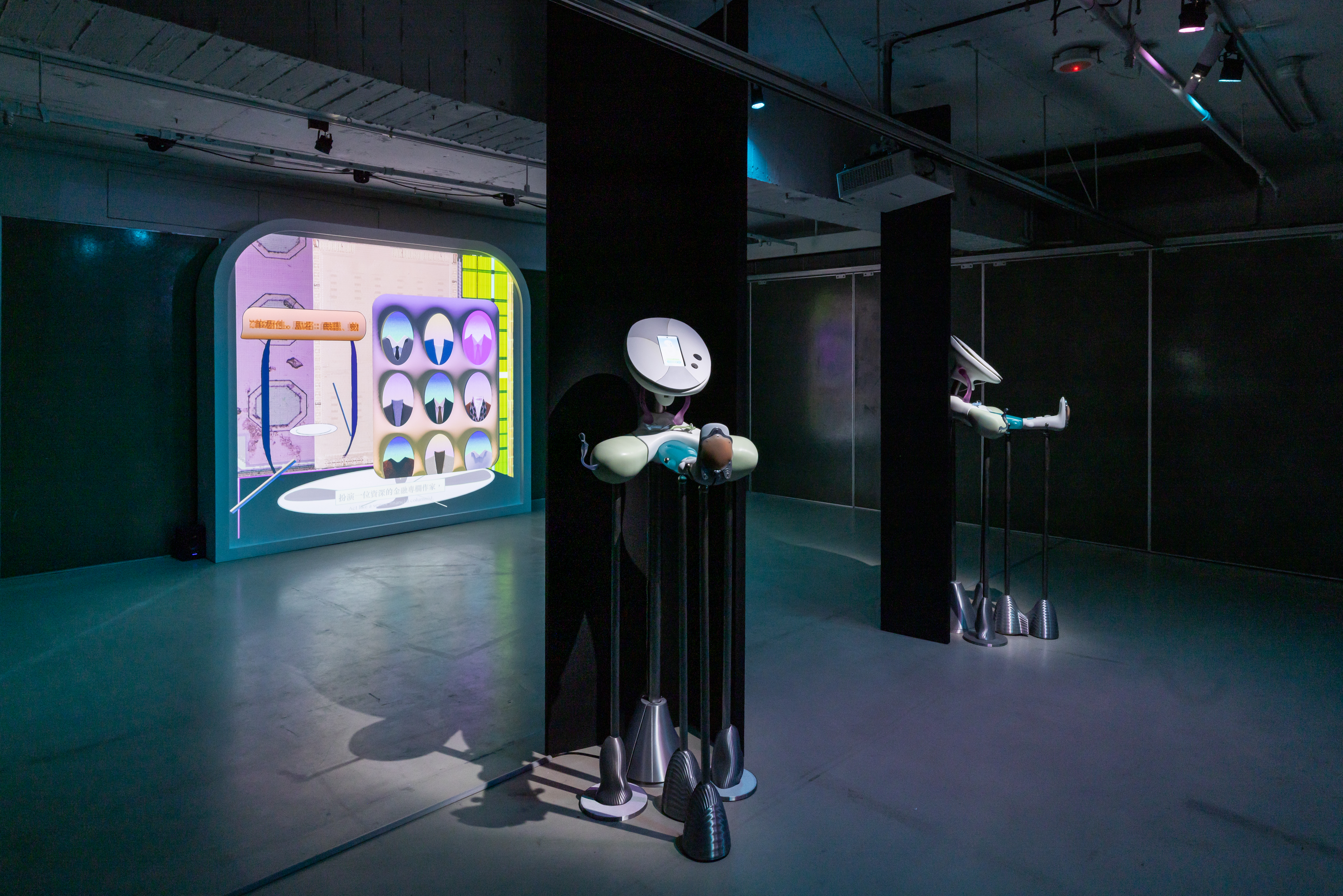
ARTIST
SHU WEI-CHENG
Shu-Wei Chang is a multidisciplinary artist based in Taiwan who works across sculptures, 3D modelling, animation, and mixed media drawings to explore the possible forms of digital gadgets as non-human yet intelligent beings. Chang’s practice delves into human-machine hybridity, navigating the in-betweenness of human and non-human interactions. Drawing on her interests in Internet phenomena and the properties of technological devices, her current focus lies in the mutual prostheticisation between technological objects and the human body, leading towards an imagined ergonomic system where each displaces and redefines the other. Aesthetically, she is also interested in the potentiality of cuteness within internet discourse, considering its affective and subversive capacities that breaks the conventional narrative of advanced technology and intelligence.
Chang has finished her study in MFA Fine Art at Goldsmiths, University of London (2025) with distinction. She holds a Bachelor of Fine Arts from Taipei National University of the Arts (2021) and studied as an exchange student at Tama Art University in Tokyo (2019). She also works in the 2D/online world as ▲; Fly & Lunch Box and has been participating in art book fairs in Europe and Taiwan, including Break Off Art Book Fair, Other Comic Coop vol. 2, Fumetto Comic Festival, Fanzinest Vienna Art Book & Zine Fair, and others since 2019.
bottom of page