top of page


2026
TUNG CHUNG PRIZE
2026 Tung Chung Prize
CHIU CHENG HUNG
2026/9/30

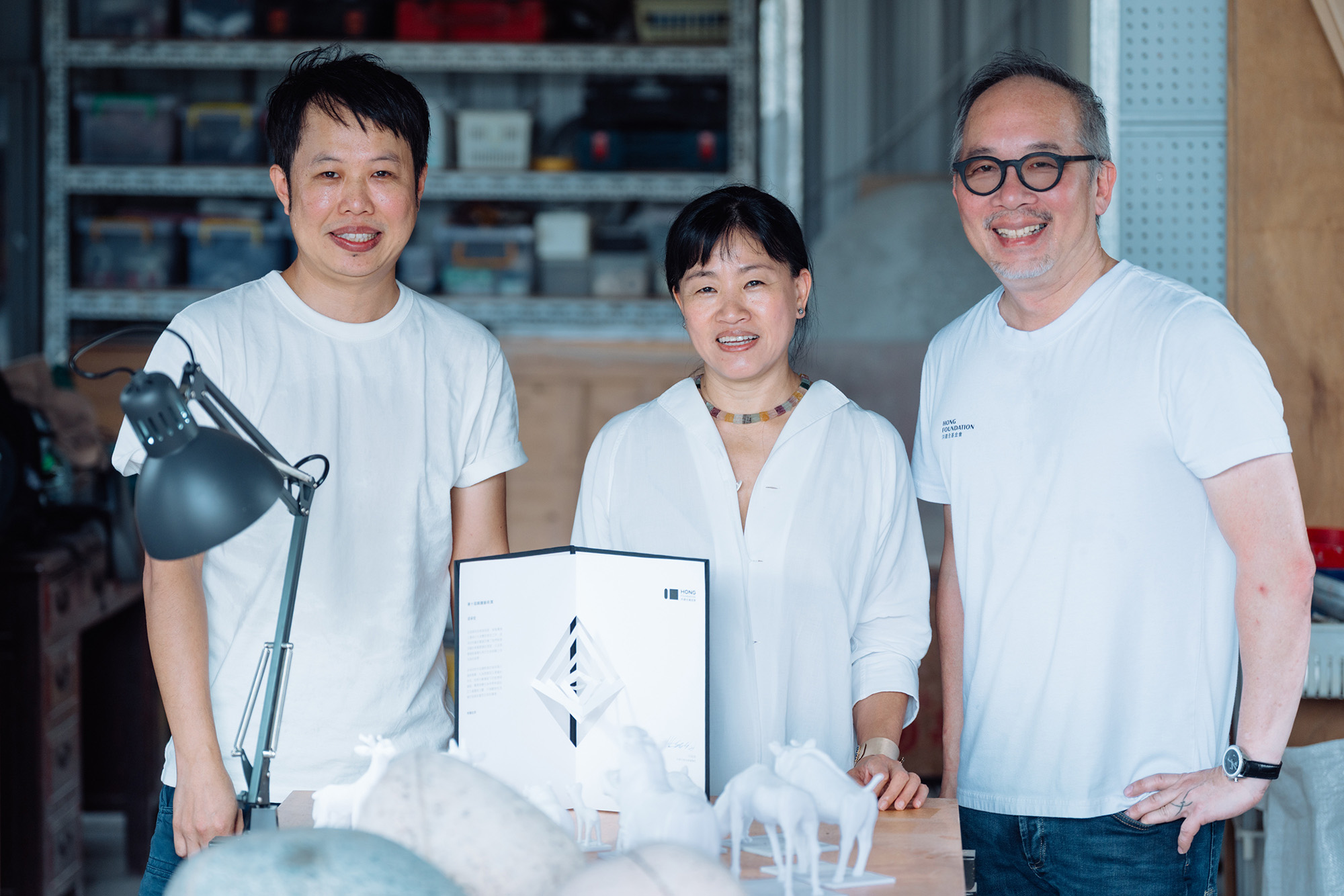
Through sculpture, installation, and artistic action, Chiu Cheng-Hung explores the passage of time embedded in material. Grounded in lived experience and guided by a slow, deliberate process, the practice transforms materials through physical labor, allowing traces of destruction to take on new forms and meanings.
“Overloaded and desensitized by screens and fast technologies that seduce us with infinitely moving, bite-sized consumptions, we increasingly long for a deeper accumulation of meaning, a sense of worth that demands great effort to attain, and the tangible presence of the weight of physical materiality and memory,” says Grace Cheung, Executive Director of Hong Foundation. “Chiu’s work and artistic practice are precisely a response to this longing. He picks up the broken pieces that surround us to try to resuscitate it into something delicate yet massively weighted, taking disastrous destruction and conjuring their darkness into wonder and hope.”

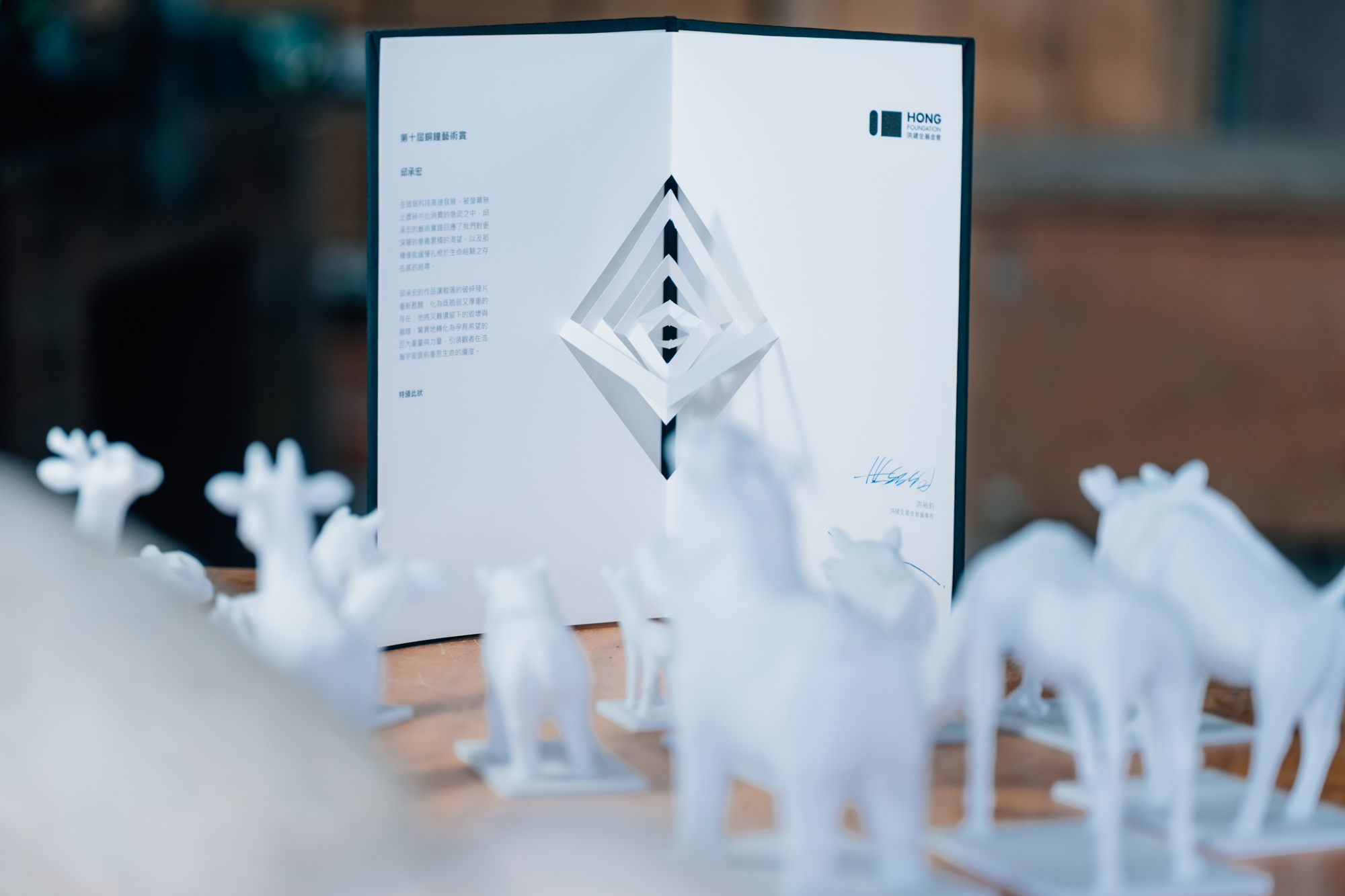
The Tung Chung Prize is an award personally sponsored by Celia Hong Chien Chinghui, founder of Hong Foundation. Grounded in the forward-looking concept of “cultural venture capital,” the prize selects one Taiwanese contemporary artist with a distinctive vision and international perspective, recognizing their potential at the conceptual stage and providing a grant of NT$1 million in the form of an art commission to support a year of creative development. Since its establishment in 2018, the prize has supported artists working across diverse media and disciplines, including Hsu Chia-Wei, Cheng Hsien-Yu, Lin Pei-Ying, Chihying, and Lee Yi-Fan, all of whom are now active on the international art scene, reflecting the prize’s forward-looking vision. Following the 2025 Special Award, which paid tribute to the legendary artist Tehching Hsieh, the 2026 Tung Chung Prize is awarded to artist Chiu Cheng-Hung in recognition of his artistic practice.
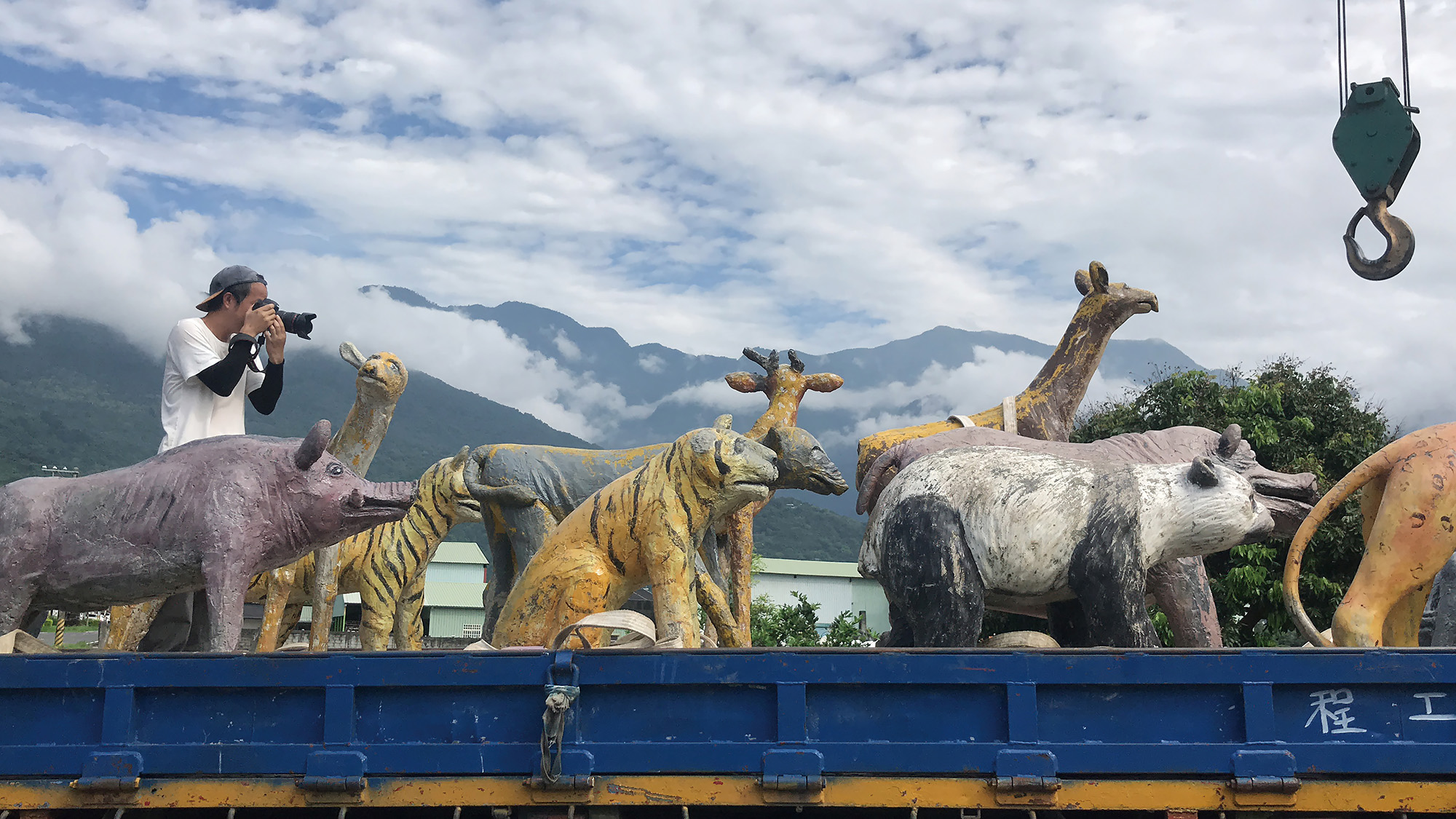
Chiu Cheng-Hung’s practice extends beyond considerations of artistic media. “Concrete Zoo” originated from a desire to have animal sculptures gaze out toward the sea and the moon, serving as mirrors that reflect humanity’s longing for permanence. This initial vision has continued to evolve since 2020. Through a prolonged process of searching, excavation, restoration, and return, Chiu has gradually recovered concrete animal sculptures scattered throughout urban corners and mountainous landscapes. These stand-ins for an imagined urban nature are reinstalled within a cyclical conception of time, becoming a form of resistance to temporal and rational orders while creating moments for contemplation and sustained reflection. In the series “Embroidered Swallows”, Chiu further extracts the gaps and imperfections found in these concrete animals, enlarging their cracks and cavities before transforming them into sculptural forms using minerals, concrete, brass, and other materials, drawing inspiration from the Japanese art of kintsugi. Here, imperfections themselves become the subject of sculpture, overturning conventional notions of wholeness and fragmentation.
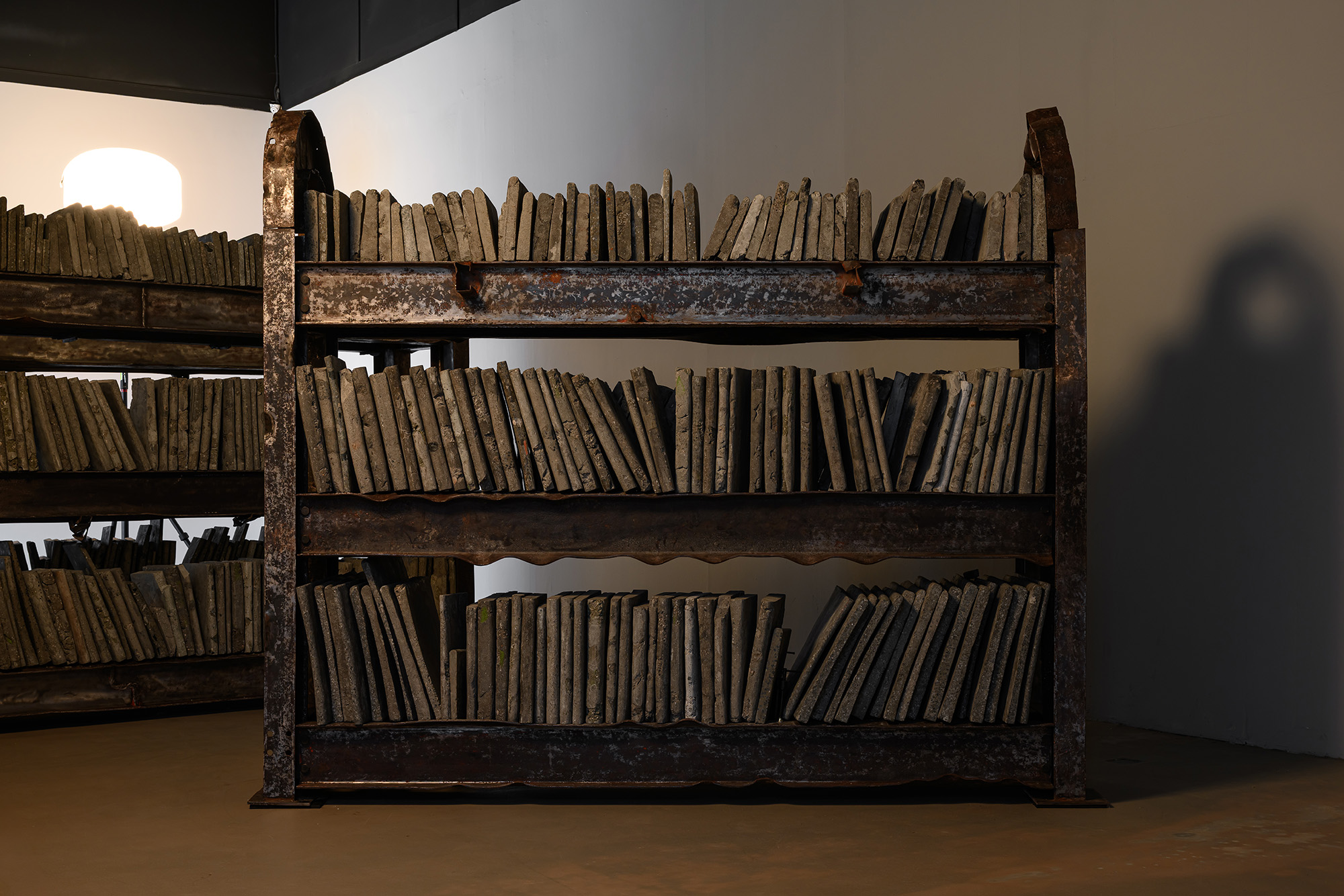
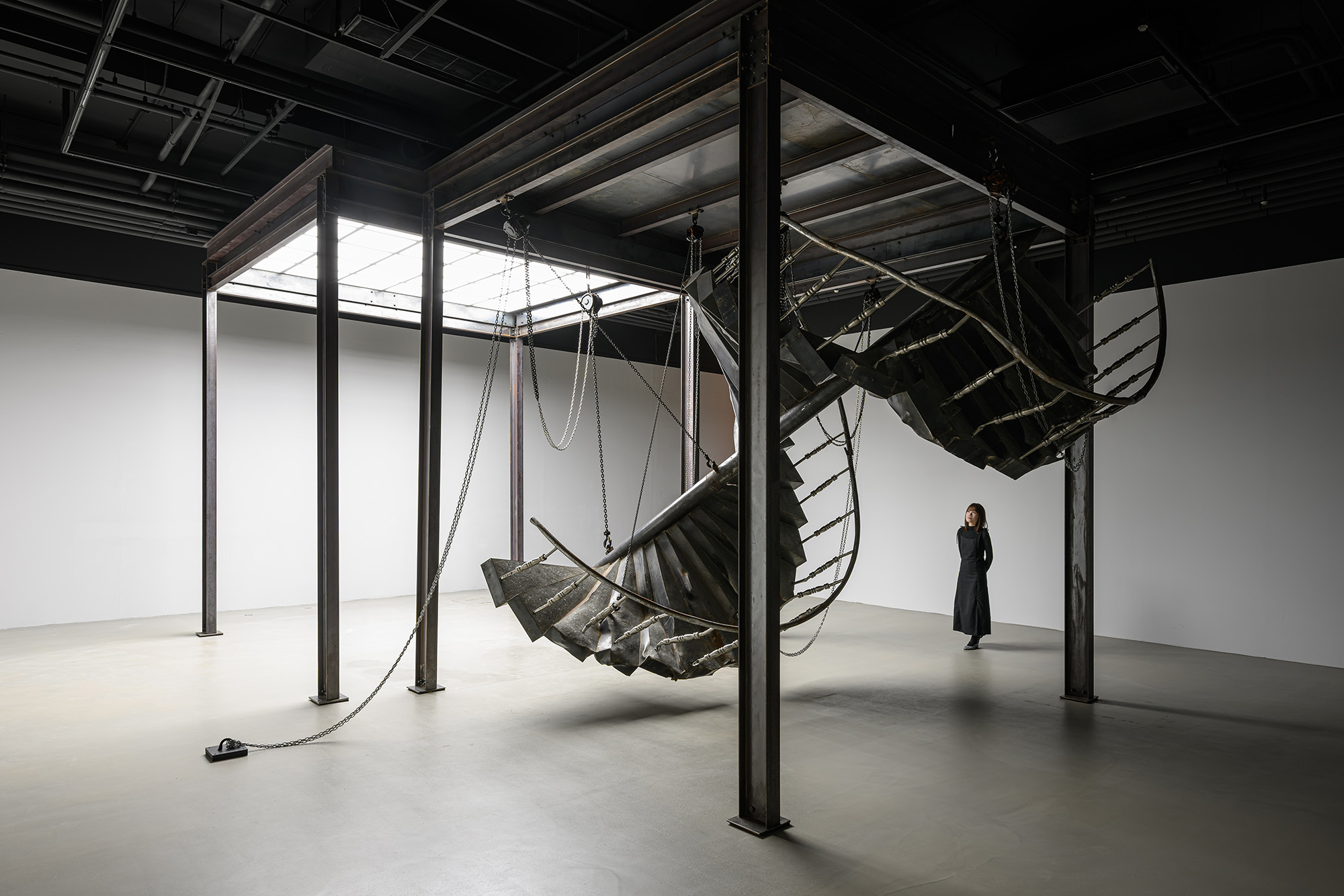
Having lived in Hualien for many years, Chiu has experienced earthquakes and the arduous process of reconstruction that follows. During this time, he collected and sorted the rubble of collapsed buildings, repurposing materials that hold traces of memory and time. He reassembled fragments of concrete into thousands of blank books and transformed twisted and deformed steel structures into bookshelves, ultimately constructing a library titled “Night and Soul”. Meanwhile, “Unbalanced Spira”l takes the form of a monumental spiral staircase inspired by both the Fibonacci sequence and the double helix of DNA, condensing within it the natural principles of geological movement and the cycles of life.
Chiu gathers fragments of memory from forgotten objects, reassembling and tempering them into new forms of remembrance, gradually developing a distinctive practice they describe as a form of “memory restoration .”Objects made by humans may ultimately succumb to the forces of nature, yet they can also be recovered and reconstructed through meticulous craftsmanship. This practice reflects the human condition when confronted with an unknowable universe: a state of powerlessness that nevertheless persists in its impulse to create.
In his new work, scheduled for presentation in 2027, Chiu will continue his practice of slowly intervening in material through the labor of their own hands, loosening the structures of time and rational order embedded within it. Through this process, Chiu invites audiences to contemplate how life endures and how the very meaning of existence can be redefined.
ARTIST
CHIU CHENG HUNG
Chiu Chen-Hung was born in 1983 in Hualien, Taiwan. In 2008, he completed the graduate program in plastic arts at the National Taiwan University of Arts. His works are primarily presented in the framework of installation and sculpture. Like conducting an archeological expedition, he is especially proficient in excavating remaining outlines and imprints from bygone time and space. Through his practice of abstraction and reinterpreting both designed and rationalized logics, he vividly reshapes these existed objects and thus develop a vast memory restoration.
Chiu’s notable solo exhibitions include Embroidered Swallows Across Original Jungle, TKG+ Projects(Taipei, Taiwan, 2021); Phototaxis, Kunstlerhaus Bethanien (Berlin, Germany, 2019); The Dust of Time, Yiri Arts (Taipei, Taiwan, 2017); and A Deer of Nine Colors, Kuandu Museum of Fine Arts (Taipei, Taiwan, 2015). Group exhibitions include The Sovereign Asian Art Prize Finalists Exhibition, Hong Kong Convention and Exhibition Centre(Hong Kong, China, 2022); The Secret South: From Cold War Perspective to Global South in Museum Collection, Taipei Fine Arts Museum (Taipei, Taiwan, 2020); Asian Art Biennial: The Strangers From Beyond the Mountain and the Sea, National Taiwan Museum of Fine Arts (Taichung, Taiwan, 2019); Island Tales: Taiwan and Australia, Taipei Fine Arts Museum (Taipei, Taiwan, 2019), Shattered Sanctity, Museum of Contemporary Art (Taipei, Taiwan, 2017); Taiwan Biennial: The Possibility of an Island, National Taiwan Museum of Fine Arts (Taichung, Taiwan, 2016); Rencontres Internationales, La Gaîté lyrique, Paris, France; Haus der Kulturen der Welt Berlin; and Reina Sofia National Museum (Madrid, Spain, 2015); Liverpool Biennial, LJMU Copperas Hills (Liverpool, U.K., 2012), THAITAI: A measure of Understanding, Bangkok Art and Culture Centre (Bangkok, Thailand, 2012); Taiwan Calling: The Phantom of the Liberty, Mücsarnok Museum (Budapest, Hungary, 2010). Artist residency programs include Künstlerhaus Bethanien (Berlin, Germany, 2019) and Cité internationale des arts (Paris, France, 2012).
bottom of page